
Sarajevo
Sarajevo’s approach brings together food, nature and community through a pioneering Food Forest that will serve as a living classroom for sustainable urban life.
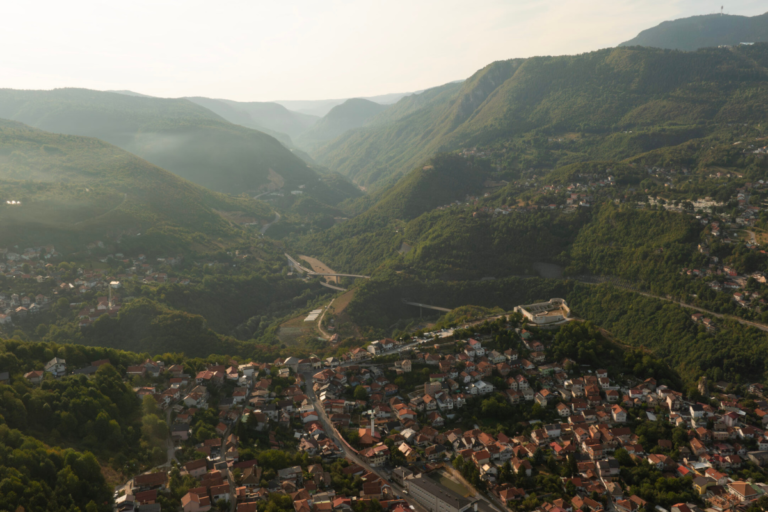
About Sarajevo
Sarajevo boasts a resilient food culture forged during the Siege of Sarajevo from 1992 to 1995. Residents, accustomed to scarcity, have a rich history of adapting their food practices. Today, this tradition endures through urban gardens and a commitment to self-sufficiency. Sarajevo also features centres for healthy ageing that incorporate gardening.
Through Bauhaus Bites, Sarajevo will build a community-driven, long-term model that integrates sustainability, inclusion, and quality public space, with potential for replication across the city and the wider region. As a Twin city, they bring this spirit of resilience and creativity to its vision for a sustainable, inclusive and educational urban food environment.
Creating a Food Forest as a Living Classroom
Sarajevo’s pilot within Bauhaus Bites will centre on the Sarajevo Food Forest in Kemal Monteno Park. The Food Forest is conceived as a multifunctional public space that connects food, nature, and community through Nature-Based Solutions, biodiversity enhancement and regenerative urban design. It will function as a living classroom, supporting learning on sustainable food systems, urban ecology, and healthy lifestyles, while hosting cultural and creative activities.
The project will be developed through a strong participatory and co-creation approach, actively involving citizens, schools, academic partners, and local institutions. Based on ideas and inputs collected from citizens, and in partnership with the Faculty of Agricultural and Food Sciences at the University of Sarajevo and other experts, the team has developed a draft conceptual design ensuring that the Food Forest reflects local needs, knowledge, and aspirations.